Psychological Safety and Physical Safety Are the Same Problem
An employee notices a machine is misfiring. A nurse realizes a protocol is being skipped. A warehouse worker sees a colleague lifting incorrectly. Whether they say something — or stay quiet — depends less on what they know than on whether they feel safe speaking up.
That distinction sits at the heart of one of the most important and underappreciated findings in workplace safety research: psychological safety and physical safety are not separate concerns. They are the same problem, expressed in different ways.
For safety officers, HR leaders, operations managers, and the executives who oversee them, understanding this connection is no longer optional. The data is clear, and the implications are practical.
What Psychological Safety Actually Means
More Than a ‘Soft Skills’ Concept
The term psychological safety was introduced by Harvard Business School professor Amy Edmondson and is defined as a shared belief among team members that the environment is safe for interpersonal risk-taking. In practice, it means employees feel comfortable asking questions, raising concerns, admitting mistakes, and flagging problems — without fear of humiliation, punishment, or retaliation.
It is not the same as being comfortable or shielded from accountability. Psychologically safe workplaces can still be demanding, high-standards environments. The difference is that in these workplaces, candor is rewarded rather than punished.
Where the Research Comes From
The concept gained mainstream attention through Google’s Project Aristotle, a multi-year study of more than 180 internal teams aimed at understanding what drives team effectiveness. Researchers expected to find that the best teams were composed of the most talented individuals. Instead, they found that the most consistently identified factor was psychological safety — whether team members felt safe taking interpersonal risks.
That finding, grounded in hundreds of interviews and data points, carried a message that applied far beyond software teams at a tech company: how people feel about speaking up matters more than almost anything else about team composition or individual skill.
The Data Linking Psychological and Physical Safety
What the National Safety Council Found
In 2023, the National Safety Council’s SAFER initiative conducted a nationwide survey of working adults across all industries and occupations. The results were striking: workers who felt psychologically unsafe on the job were 80% more likely to report having been injured at work, requiring medical attention or time away.
Even more telling: workers who felt their employer actively discouraged reporting were 2.4 times more likely to have experienced a work injury. The relationship is unlikely to be coincidental. While the data is correlational, the mechanism is clear: workplaces that suppress reporting also suppress the early signals that prevent injuries.
Workers who felt their employer discouraged reporting were 2.4 times more likely to have experienced a work injury. — National Safety Council, 2023
Why the Connection Makes Intuitive Sense
In workplaces where employees are afraid to speak up, near-misses go unreported, unsafe conditions persist, and risky practices spread unchecked. The same fear that prevents someone from raising an interpersonal concern also prevents them from flagging a malfunctioning machine or a safety shortcut. Fear of judgment does not distinguish between categories of risk.
Across Industries and Employer Types
This dynamic appears across sectors — it is not unique to manufacturing or construction. In healthcare, psychological safety has been linked to lower rates of medical errors and preventable patient harm. In logistics and distribution, it predicts near-miss reporting rates. In office and knowledge-work environments, it affects whether employees flag data privacy concerns or compliance risks before they become incidents.
Whatever your industry, if employees hesitate to speak up, you are operating with incomplete — and potentially dangerous — information about your own workplace.
Why Many Safety Programs Miss This
The Compliance-Focused Safety Model
Most workplace safety programs are built around regulatory compliance — OSHA standards, PPE requirements, incident reporting forms, annual training modules. These tools matter. But they address the observable, measurable surface of workplace safety while leaving the underlying culture largely untouched.
A compliance-focused model assumes that if employees know the rules and the equipment is up to code, safety follows. What it misses is that knowing the rules means nothing if the people who see them being broken don’t feel safe saying so.
Many organizations invest heavily in preventing unsafe actions, while underinvesting in the conditions that allow those actions to be reported. That gap is where preventable incidents live.
The Reporting Gap
Research consistently shows that workplace incidents are dramatically underreported. Employees cite fear of blame, concern about being seen as a troublemaker, worry about consequences for their supervisor or coworker, and simple skepticism that anything will change. According to the NSC, improving psychological safety directly addresses this gap — creating the conditions under which employees proactively identify and report potential hazards before they become incidents.
The Manager’s Outsized Role
Most safety culture ultimately lives or dies at the supervisor level. When a frontline manager responds to a reported concern with dismissal, annoyance, or blame, the lesson learned by everyone who witnesses it is clear: don’t bother next time. Conversely, managers who respond with curiosity and follow-through — even when the concern turns out to be minor — create the conditions for ongoing candor.
This is why psychological safety training directed only at employees misses the point. The real point of change is management behavior, not employee attitude.
What Employers Can Do: A Practical Framework
Understanding the connection is only the first step. Acting on it requires deliberate changes at three levels: culture, process, and leadership behavior.
At the Culture Level
- Normalize speaking up about safety concerns — in onboarding, in team meetings, and in how leadership talks about incidents
- Treat near-miss reports as valuable data, not admissions of failure — reward employees who surface problems before they escalate
- Conduct periodic, anonymous safety climate surveys that ask not just whether employees know the safety rules, but whether they feel safe raising concerns
- Ensure employees who report concerns — whether through internal channels or anonymous hotlines — see evidence that reports are taken seriously
At the Process Level
- Create reporting pathways that allow concerns to surface without requiring employees to confront the person involved directly
- Review incident and near-miss data not just for technical causes, but for patterns that suggest a culture of silence — repeated incidents in the same team or under the same supervisor are a signal worth investigating
- Include psychological safety indicators — reporting rates, follow-through on concerns, employee survey results — alongside traditional lagging safety metrics
At the Leadership Level
- Train supervisors and managers to respond to safety concerns in ways that encourage future reporting: acknowledge, investigate, and communicate back
- Model vulnerability from the top — leaders who acknowledge their own mistakes and openly discuss what they learned create environments where others feel safer doing the same
- Hold managers accountable not just for injury rates, but for the quality of the safety culture they build
The bottom line is straightforward: you cannot have a genuinely safe workplace if employees don’t feel safe speaking up in it.
The research from the NSC, from Harvard, and from organizations across industries consistently points to the same conclusion: psychological safety is not a soft metric or an HR aspiration. It is a leading indicator of physical safety outcomes — and one of the most actionable levers available to employers who want to reduce injuries, improve reporting, and build workplaces where problems surface before they become crises.
For safety professionals, HR leaders, and operations managers, this is an invitation to expand your definition of what a safety program is — and who it needs to reach.
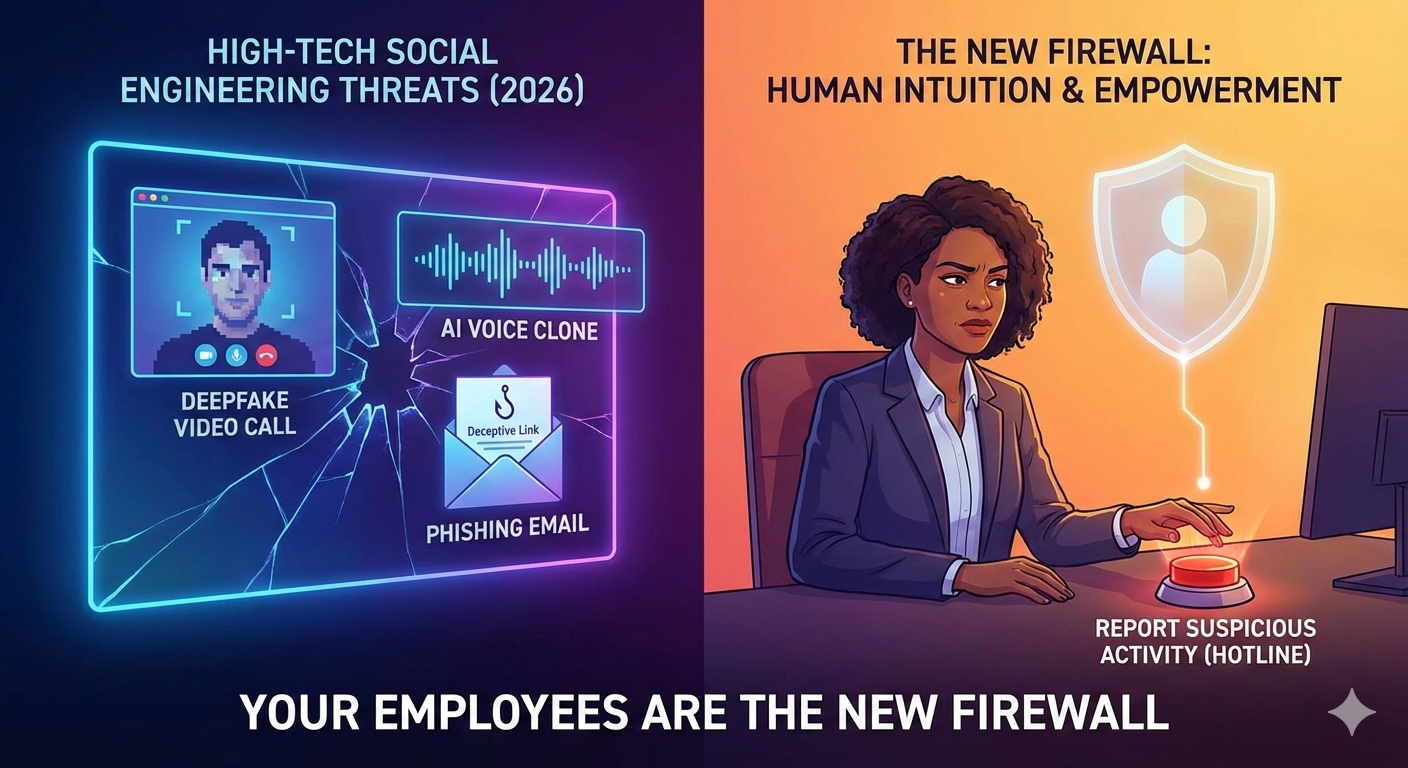
If speaking up is the critical failure point in workplace safety, then the systems that make speaking up possible matter. Red Flag Reporting provides organizations with independent, anonymous reporting channels that make it easier for employees to raise safety concerns — including those they may hesitate to bring directly to a supervisor.
Frequently Asked Questions
What is psychological safety in the workplace?
Psychological safety is the shared belief among team members that the work environment is safe for interpersonal risk-taking — including speaking up, admitting mistakes, and raising concerns without fear of punishment or embarrassment. The concept was developed by Harvard Business School professor Amy Edmondson and gained wide recognition through Google’s Project Aristotle research.
How does psychological safety affect workplace safety?
Research from the National Safety Council found that workers who feel psychologically unsafe are 80% more likely to be injured at work, and those in workplaces that discourage reporting are 2.4 times more likely to have experienced a work injury. When employees don’t feel safe speaking up, hazards go unreported and unsafe conditions persist.
Is psychological safety only relevant in high-risk industries like construction or manufacturing?
No — psychological safety affects physical safety outcomes across all industries and employer types. In healthcare it’s linked to lower medical error rates; in logistics and distribution it predicts near-miss reporting; in office environments it influences whether compliance and data risks are flagged early. Any workplace where employees observe conditions, hazards, or behaviors they might hesitate to report is affected.
What is the difference between psychological safety and employee comfort?
Psychological safety is not the same as making employees comfortable or reducing accountability. Psychologically safe workplaces can be high-standards, high-performance environments. The defining characteristic is that team members can take interpersonal risks — raise concerns, ask questions, challenge decisions — without fear of negative consequences for doing so.
How can employers improve psychological safety?
Improving psychological safety requires deliberate changes at the culture, process, and leadership levels. Key steps include normalizing near-miss reporting, training supervisors to respond constructively to concerns, creating anonymous reporting pathways, and tracking reporting rates as a leading safety indicator alongside traditional injury metrics. The most critical factor is management behavior — particularly how supervisors respond in the moment concerns are raised, which determines whether employees feel safe raising them again.
Want to know how we can help? Contact us.
Sources & Further Reading
- National Safety Council — Psychological Safety Correlates to Physical Safety (SAFER Survey, 2023)
- National Safety Council — Psychological Safety at Work
- Google re:Work — Understand Team Effectiveness (Project Aristotle)
- Harvard T.H. Chan School of Public Health — Psychological Safety at Work Is Essential, Especially Amid Crisis
- WorkCare — The Business Case for Psychological Safety in the Workplace
Reach Us
Red Flag Reporting
P.O. Box 4230, Akron, Ohio 44321
Tel: 877-676-6551
Fax: 330-572-8146