
What is Regulatory Compliance? Requirements, Risk, and Program Best Practices
Every organization — regardless of size, industry, or structure — operates within a web of laws, regulations, industry standards, and contractual obligations. Regulatory compliance is the ongoing process of meeting those requirements. It is not a one-time checkbox or a passive stance. It is an active, documented program of policies, controls, monitoring, and reporting that allows organizations to meet their obligations and demonstrate that adherence to regulators, auditors, and stakeholders.
As a trusted hotline provider, Red Flag Reporting helps organizations build the reporting infrastructure that regulators and enforcement bodies look for when evaluating compliance program quality.
What is Regulatory Compliance?
Definition and Overview
Regulatory compliance refers to the process by which organizations identify and adhere to the federal, state, and local laws; industry regulations; professional standards; and contractual obligations that govern their operations. Compliance is not a single activity — it is an ongoing program of documented policies, employee training, operational controls, monitoring, auditing, and reporting designed to ensure the organization meets its legal and ethical obligations and can demonstrate that adherence when required.
Why Regulatory Compliance Matters
Organizations that fail to meet their regulatory obligations face serious consequences: civil and criminal fines, enforcement actions, license revocations, reputational damage, and, in severe cases, personal liability for executives and board members. Beyond the penalties, a compliance failure signals to the market, to partners, and to employees that the organization cannot be trusted to govern itself responsibly.
The reverse is equally true. Organizations with documented, well-functioning compliance programs are better positioned when regulators and enforcement agencies come calling. Prosecutors, auditors, and oversight bodies consistently give credit to organizations that can demonstrate a genuine, proactive commitment to compliance — not just good intentions after the fact.
Key Areas of Regulatory Compliance
Legal and Statutory Requirements
At the foundation of every compliance program is a clear-eyed inventory of the laws that apply to the organization. These include employment and labor law, financial reporting and securities requirements, data privacy regulations (such as HIPAA, GDPR, and state-level privacy statutes), anti-bribery and anti-corruption statutes, and any industry-specific laws that govern the organization’s sector. Organizations must not only understand these requirements but must build policies and controls that align operations to them — and update those policies as laws evolve.
Industry Standards and Regulatory Frameworks
Many organizations operate under sector-specific regulatory frameworks administered by designated oversight bodies. Financial services firms answer to the SEC, FINRA, and banking regulators. Healthcare organizations operate under CMS, OIG, and state licensing boards. Federal contractors must comply with the FAR, DFARS, and related agency supplements. Publicly traded companies are subject to Sarbanes-Oxley requirements and SEC disclosure obligations. Each framework brings its own compliance requirements, reporting expectations, and enforcement mechanisms — and compliance programs must be tailored to address each applicable framework specifically.
Contractual and Third-Party Obligations
Compliance obligations do not end at the organization’s own walls. Contracts with customers, vendors, suppliers, and partners frequently impose specific compliance requirements — data handling standards, subcontractor oversight obligations, anti-corruption certifications, and audit rights. Third-party relationships also introduce compliance risk: the misconduct of a vendor or partner can expose the organization to regulatory scrutiny. Effective compliance programs include third-party risk management processes that assess, monitor, and document the compliance posture of key relationships.
Building a Regulatory Compliance Program
Policies and Procedures Aligned to Regulatory Requirements
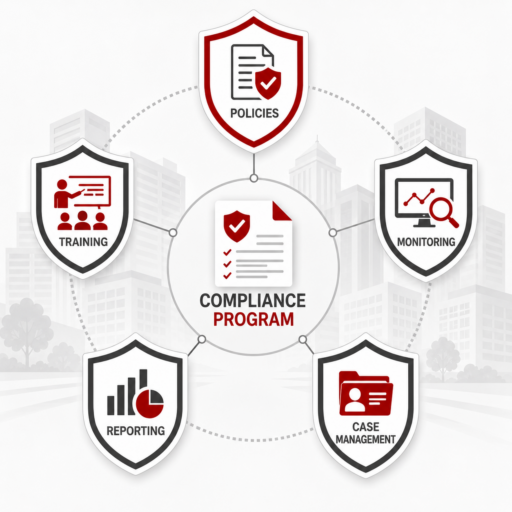
A regulatory compliance program begins with documented policies and procedures that reflect the specific requirements applicable to the organization. These policies translate legal and regulatory obligations into operational guidance — defining what employees must do, what they must avoid, and how they should respond when issues arise. Policies must be reviewed and updated on a regular cycle, and whenever regulations change or new obligations attach, to ensure they remain accurate and enforceable.
Training and Employee Awareness
Compliance policies are only effective if employees understand them. Regulators and enforcement bodies consistently view robust compliance training as a meaningful indicator of organizational commitment — and the absence of training as evidence that a compliance program is cosmetic rather than functional. Effective training programs are role-specific, regularly updated, and documented so the organization can demonstrate that employees received and understood their compliance obligations.
Monitoring and Auditing
Compliance programs require ongoing monitoring to identify gaps, detect potential violations, and verify that controls are working as intended. Periodic internal audits — and, where appropriate, independent external reviews — add another layer of assurance. Documented monitoring and audit activity provides critical evidence that the organization actively oversees its compliance posture rather than simply adopting policies and hoping for the best. When regulators or prosecutors evaluate a compliance program, the presence or absence of monitoring activity is often a key indicator of program quality.
Reporting Channels and Incident Response
Even the best-designed compliance program cannot catch everything through monitoring alone. Employees, contractors, and other insiders are frequently the first to observe potential violations — but they will only come forward if they have a safe, accessible, and confidential mechanism to do so. Dedicated reporting channels, including independent whistleblower hotlines, give the organization an early warning system that surfaces concerns before they become violations. Our hotline services are designed to meet the confidential reporting requirements recommended across major regulatory frameworks, giving employees the confidence to report without fear of retaliation.
| What Regulators Look for in a Compliance Program
• Documented policies and procedures aligned to applicable requirements • Regular compliance training and employee awareness programs • Ongoing monitoring and periodic auditing of compliance controls • Accessible, independent reporting channels for employees • Documented investigation and case management processes • Evidence of consistent enforcement and corrective action |
Regulatory Expectations for Whistleblower Hotlines
How Regulators View Reporting Infrastructure
Multiple regulatory frameworks explicitly treat the availability of confidential reporting channels as a meaningful indicator of compliance program quality. The U.S. Department of Justice’s Evaluation of Corporate Compliance Programs asks whether organizations have “an effective system for confidential reporting” and examines whether employees are aware of and actually use those channels. The U.S. Sentencing Guidelines instruct courts to consider whether organizations have “established standards and procedures” and “established and publicized” reporting mechanisms when evaluating organizational culpability. Sarbanes-Oxley requires audit committees of public companies to establish confidential, anonymous submission procedures for concerns about accounting and auditing matters.
Organizations without accessible, independent reporting channels may face heightened scrutiny in enforcement proceedings — and organizations with well-documented, actively used reporting infrastructure are better positioned to demonstrate genuine compliance commitment.
Hotlines as Evidence of Compliance Commitment
An independent, third-party whistleblower hotline is one of the clearest structural signals an organization can send. Unlike an internal reporting mechanism managed by the same leadership team that employees may fear reporting to, a third-party hotline provides genuine independence, documented confidentiality, and professional intake — all of which regulators, auditors, and enforcement bodies recognize as markers of a serious compliance program. Implementing a third-party hotline demonstrates that the organization has made a structural commitment to surfacing and addressing compliance concerns, rather than suppressing them.
Using Hotline Data to Demonstrate Ongoing Compliance
Beyond the structural signal, an active hotline generates documented evidence of how reported concerns are received, triaged, investigated, and resolved. Hotline reporting trends — what is being reported, by whom, at what frequency — give compliance teams actionable intelligence about where risk is concentrating in the organization. Case management records provide the auditable trail that regulators and enforcement bodies expect when evaluating whether a compliance program is operational, not just nominal.
How Red Flag Reporting Supports Regulatory Compliance
An Independent Hotline That Meets Regulatory Expectations
Red Flag Reporting provides organizations with a third-party whistleblower hotline that satisfies the reporting channel requirements and recommendations of major regulatory frameworks. As an experienced hotline provider, Red Flag Reporting’s platform gives compliance teams a confidential, third-party reporting channel and case documentation tool — giving employees a trusted way to surface concerns and giving management the structured intake and record-keeping that regulators and auditors look for.
Case Management Tools That Support Audit Readiness
Receiving a report is only the beginning. Red Flag Reporting’s case management system allows organizations to document how each reported concern is received, categorized, investigated, and resolved. That documentation creates the auditable record that regulators and enforcement bodies expect to see when evaluating compliance program quality — and gives internal audit and legal teams the evidence they need to demonstrate program effectiveness. Our hotline services are built around both the intake function and the case management infrastructure required for a fully defensible compliance program.
Implementation and Next Steps
Regulatory compliance is demonstrated through documented programs and infrastructure, not good intentions alone. If your current reporting infrastructure does not meet the expectations of the regulatory frameworks that govern your organization’s operations, there is a straightforward path to closing that gap. Red Flag Reporting provides the independent hotline and case management tools that give organizations the reporting infrastructure regulators and auditors look for — and the documented evidence they expect when they come to evaluate your compliance program.
Compliance and legal leaders are encouraged to assess their current reporting channels against the requirements of their applicable frameworks and to contact us to learn how Red Flag Reporting can help.
Frequently Asked Questions: Regulatory Compliance
- What is a regulatory compliance program and what does it include?
A regulatory compliance program is an organization’s structured system for identifying, meeting, and demonstrating adherence to the laws, regulations, industry standards, and contractual obligations that govern its operations. Effective programs include documented policies and procedures aligned to applicable requirements; regular employee training and awareness programs; ongoing monitoring and periodic auditing of compliance controls; accessible and independent reporting channels such as a whistleblower hotline; documented investigation and case management processes; and evidence of consistent enforcement and corrective action. Regulators and enforcement bodies evaluate the quality and functionality of compliance programs when making charging decisions, sentencing recommendations, and penalty determinations.
- What are the risks of non-compliance with regulatory requirements?
Organizations that fail to meet their regulatory compliance obligations face a range of serious consequences. These include civil monetary penalties and fines, criminal liability for the organization and, in some cases, individual executives, revocation of licenses or authorizations to operate, mandatory government oversight or monitorship, reputational damage with customers, partners, and investors, and in publicly traded companies, securities law exposure. Beyond formal penalties, compliance failures also signal to regulators that an organization lacks a credible compliance program, which can increase scrutiny in future interactions and limit the organization’s ability to negotiate favorable resolutions.
- Do regulatory frameworks require organizations to have a whistleblower hotline?
Multiple major regulatory frameworks explicitly require or strongly recommend that organizations provide accessible, confidential reporting channels for employees. The U.S. Sentencing Guidelines require organizations to have mechanisms for reporting criminal conduct without fear of retaliation as part of an effective compliance program. Sarbanes-Oxley requires audit committees of public companies to establish procedures for confidential, anonymous reporting of concerns about accounting matters. The DOJ’s Evaluation of Corporate Compliance Programs asks whether organizations have an effective confidential reporting system and whether employees actually use it. Organizations that cannot demonstrate accessible reporting infrastructure may face heightened scrutiny in enforcement proceedings and reduced credit for compliance program quality.
- What is the difference between internal and third-party whistleblower hotlines for regulatory compliance purposes?
An internal reporting mechanism — such as a direct line to HR or the compliance office — may technically satisfy some minimum requirements, but it can undermine employee confidence, since reporters may fear their concern will reach the same leadership they are reporting about. A third-party whistleblower hotline, operated by an outside provider, offers a confidential, professionally managed intake channel that encourages reporting — all of which are recognized by the DOJ, U.S. Sentencing Guidelines, and other regulatory bodies as evidence of a meaningful structural commitment to compliance. Third-party hotlines also provide the documented intake records that support the audit trail organizations need when enforcement bodies evaluate program quality.
- How does regulatory compliance monitoring differ from a one-time audit?
A periodic audit is a point-in-time evaluation of whether an organization is meeting its compliance obligations. While audits are valuable and expected by most regulatory frameworks, they capture compliance at a single moment and may miss issues that arise between audit cycles. Ongoing regulatory compliance monitoring, by contrast, is a continuous process of reviewing controls, tracking metrics, and surfacing anomalies in real time. Together, monitoring and auditing create a layered compliance assurance model. Regulators and enforcement bodies distinguish between organizations that rely solely on periodic audits and those that can demonstrate ongoing, documented monitoring activity — the latter signals a functionally operational compliance program rather than a nominal one.