
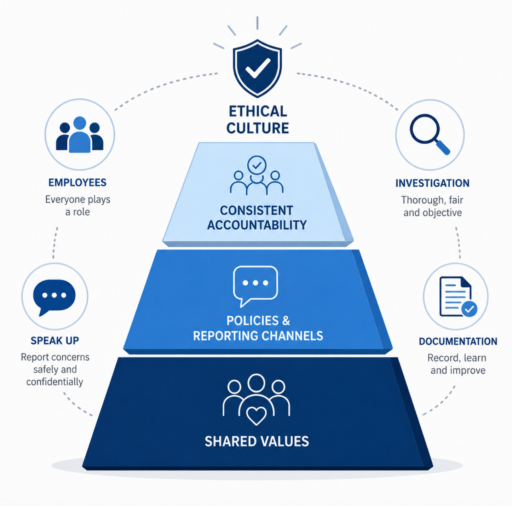
What is Organizational Culture? Ethics, Integrity, and Compliance
Organizational culture is one of the most consequential forces shaping how a business operates — and one of the most underestimated factors in whether a compliance program actually works. While policies, training, and reporting systems all matter, none of them function in isolation. They operate within a culture that either reinforces or undermines them.
Understanding what organizational culture means in a compliance context, and what it takes to build and sustain a culture rooted in integrity, is essential for compliance officers, HR leaders, and anyone responsible for protecting their organization from misconduct and its consequences.
What is Organizational Culture?
Definition and Overview
Organizational culture refers to the shared values, behaviors, and norms that define how an organization operates — how decisions are made, how people treat one another, and what employees understand to be acceptable or unacceptable conduct. Culture is not a single document or policy statement. It is the lived experience of working within an organization, shaped over time by leadership example, institutional habits, and the signals employees receive when they observe how the organization responds to success and failure alike.
Culture is both formal and informal. Formally, it is expressed through written policies, codes of conduct, mission statements, and leadership communications. Informally, it emerges through the day-to-day behavior of managers and executives, the stories employees tell about what happened when someone raised a concern or cut a corner, and the unspoken understanding of what behaviors are rewarded or ignored.
When formal and informal culture align — when stated values match observable behavior — employees tend to trust the organization and engage with its systems. When they diverge, when leadership says one thing and does another, culture becomes a liability rather than an asset.
Why Organizational Culture Matters for Compliance
Compliance programs are only as effective as the culture in which they operate. An organization can invest in robust policies, regular training, and sophisticated reporting tools and still fail to detect and address misconduct — if the underlying culture discourages employees from speaking up, protects certain individuals from accountability, or signals that ethical concerns are unwelcome.
Regulators — especially the DOJ — explicitly evaluate whether a compliance program works in practice, including whether employees can report concerns without fear of retaliation. The SEC similarly considers factors like effective compliance procedures and an appropriate tone at the top when evaluating cooperation and remediation. A program that looks good on paper but operates in a culture of silence or retaliation is less likely to be viewed as effective, because prosecutors focus on whether the program works in practice, not just on paper.
U.S. Sentencing Guidelines likewise frame an effective compliance and ethics program as one that promotes an organizational culture encouraging ethical conduct and supports reporting without fear of retaliation — reinforcing that culture is not a soft consideration but a defined element of program effectiveness.
This is why culture is not separate from compliance infrastructure. It is the environment in which compliance infrastructure either succeeds or fails.
The Connection Between Culture and Ethical Behavior
How Culture Shapes Employee Behavior
Organizational culture functions as an invisible governance system. It shapes how employees interpret ambiguous situations, whether they feel empowered to raise concerns, and what they believe will happen if they do. When employees observe that raising a concern results in recognition and resolution, they are more likely to report future concerns. When they observe that reports are ignored, dismissed, or met with retaliation, they learn to stay silent — regardless of what the employee handbook says.
Culture also influences how readily employees follow policies in practice, not just in principle. Policies that align with cultural norms are followed consistently. Policies that conflict with cultural norms — or that are perceived as burdensome, performative, or selectively enforced — are treated as background noise. This gap between policy and practice is where compliance programs most commonly fail.
Tone at the Top and Its Cultural Impact
Leadership behavior is among the most powerful drivers of organizational culture. Employees at every level take cues from what leaders do, not just what they say. When senior leaders model ethical behavior — acknowledging mistakes, holding themselves accountable, and treating compliance as a genuine priority rather than a legal obligation — that behavior sets a cultural standard.
Conversely, when leaders are visibly shielded from accountability, when misconduct at the top is minimized or rationalized, or when ethical concerns raised by employees are met with indifference, the cultural message is clear: the rules apply selectively. This is one of the most corrosive dynamics in any organization, and one of the most difficult to reverse.
The concept of tone at the top extends beyond the C-suite. Middle managers and supervisors carry enormous cultural influence because they are the leaders employees interact with daily. Organizations that invest in ethical culture at all levels of management — not just at the executive level — build significantly more resilient compliance programs.
The Role of a Speak-Up Culture
One of the clearest expressions of a healthy organizational culture is whether employees feel safe raising concerns without fear of retaliation. This is often described as a speak-up culture — an environment in which employees believe their voices are welcomed, their reports will be taken seriously, and they will not be penalized for bringing issues to light.
A strong speak-up culture does not emerge automatically. It requires sustained commitment from leadership, accessible and trustworthy reporting channels, and a demonstrated track record of taking reports seriously and protecting those who make them. Organizations that invest in building this culture create a meaningful early-warning system for misconduct and a foundation for lasting ethical integrity.
How Compliance Programs Reinforce Organizational Culture
Policies and Training as Cultural Signals
Written policies and compliance training are among the primary formal mechanisms through which organizations communicate their values. A code of conduct that clearly articulates expectations around conflicts of interest, data privacy, anti-bribery, and workplace conduct tells employees what the organization stands for. Compliance training that brings those expectations to life with realistic scenarios helps employees apply them in practice.
The cultural impact of policies and training, however, depends almost entirely on what follows. If employees complete annual ethics training and then observe their supervisor falsify expense reports without consequence, the training has communicated nothing credible about the organization’s actual values. Policies and training are necessary cultural tools — but their credibility is entirely downstream of enforcement and follow-through.
Reporting Channels as a Cultural Commitment
Providing employees with a credible, accessible anonymous reporting channel is one of the most direct signals an organization can send about its commitment to transparency and accountability. It communicates that leadership wants to know when something is wrong — that concerns will not simply disappear into an internal process where they can be managed or minimized by those with the most to lose.
Third-party reporting channels can reduce perceived conflicts of interest and increase employee confidence in confidentiality — especially when paired with strong anti-retaliation practices and credible follow-through. Employees who might hesitate to report concerns to a supervisor or internal HR are more likely to use a channel they perceive as genuinely independent and separate from the management structures they may be reporting on.
Consistent Response as a Cultural Driver
Of all the factors that shape organizational culture around ethics and compliance, how the organization responds to reported concerns may be the most important. Employees who report concerns and see them investigated thoroughly, handled fairly, and resolved with appropriate follow-through will report again in the future — and will tell their colleagues that the system works.
Employees who report concerns and experience delays, vague outcomes, no communication, or, worst of all, retaliation, will not report again. And they will tell their colleagues about that experience too.
Consistent, credible response is not just a compliance obligation. It is a cultural investment. Every investigation that is handled well reinforces the organization’s stated values. Every investigation that is mishandled erodes them.
Building and Sustaining an Ethical Organizational Culture
Embedding Integrity into Organizational Systems
Ethical culture is not sustained through aspirational statements alone. It requires systems that make integrity the path of least resistance — structures that remove ambiguity, reduce the barriers to reporting, and make accountability visible and consistent.
These systems include clear and accessible policies, reporting channels that employees trust, case management processes that ensure consistent investigation and documentation, and leadership practices that model and reinforce the values the organization claims to hold. When these systems function well and align with stated values, culture reinforces compliance. When they are absent, weak, or selectively applied, culture becomes a liability.
Measuring Cultural Health Through Reporting Data
Hotline utilization rates, reporting trends, and case outcomes provide compliance and HR leaders with meaningful data about the health of organizational culture — but that data always requires context. Very low utilization in a well-publicized system may signal awareness or trust gaps worth investigating. Higher utilization can reflect a healthy speak-up environment, an elevated underlying issue rate, or both. Patterns concentrated in specific departments or geographies may point to localized cultural problems. Pairing hotline metrics with employee surveys and other qualitative data gives leaders a fuller and more defensible picture.
Reviewing this data regularly — and sharing relevant trends with leadership and audit committees — transforms ethics hotline reporting from a reactive compliance tool into a proactive indicator of cultural risk. This kind of visibility helps organizations address emerging issues before they become systemic problems.
Addressing Cultural Failures Before They Escalate
One of the most important functions of a well-designed ethics and compliance program is surfacing cultural problems early — when they are still isolated incidents rather than entrenched norms. This requires a reporting channel that employees trust enough to use and a case management process that documents, investigates, and resolves concerns in a way that is consistent, thorough, and transparent.
Organizations that catch misconduct early, respond credibly, and communicate outcomes appropriately send a powerful cultural signal: integrity is not just a value written on a wall — it is something this organization actively defends.
| Signs of a Strong Ethical Organizational Culture |
| • Leadership models ethical behavior consistently and visibly |
| • Employees feel safe raising concerns without fear of retaliation |
| • Reporting channels are accessible, independent, and trusted |
| • Investigations are thorough, timely, and consistently applied |
| • Accountability is enforced at all levels of the organization |
| • Hotline utilization and reporting trends are reviewed regularly by leadership |
How Red Flag Reporting Supports Ethical Organizational Culture
An Independent Reporting Channel That Reinforces Trust
Red Flag Reporting operates as a trusted, independent hotline provider, giving employees a secure channel to report concerns that sits entirely outside internal management structures. Importantly, Red Flag Reporting does not investigate or adjudicate reports — that responsibility remains with the organization. What we provide is the infrastructure that makes reporting possible and trustworthy: confidential and anonymous intake, protected two-way communication between reporters and the organization, and the case management tools compliance and HR teams need to receive, track, and respond to concerns consistently.
This independence matters because employees who might hesitate to report through internal channels — out of concern about confidentiality, anonymity, or how a report might be handled — are more likely to use a channel they perceive as genuinely separate from the management structures they may be reporting on. By protecting anonymity while keeping lines of communication open, Red Flag Reporting gives employees a voice and gives organizations the visibility they need to respond. The credibility of that response, and the integrity of the investigation and resolution process, remains where it belongs: with the organization itself.
Case Management Tools That Make Accountability Visible
Beyond the reporting channel itself, Red Flag Reporting’s case management system gives compliance and HR teams the infrastructure to investigate consistently, document outcomes, and identify patterns across reports over time. This documentation capability supports the kind of credible, visible accountability that healthy organizational culture depends on.
When investigations are well-documented and outcomes are tracked, leadership has the data they need to assess whether the organization is responding consistently across departments, levels, and issue types. This consistency is one of the most important drivers of employee trust — and employee trust is the foundation of a functional speak-up culture.
Implementation and Next Steps
Organizational culture is shaped by how an organization responds when things go wrong. Compliance officers and HR leaders who want to build and sustain an ethical culture need more than good intentions — they need the infrastructure to make integrity and accountability operational.
Red Flag Reporting’s hotline services and case management solutions give organizations the independent reporting channel and investigation tools that translate cultural values into everyday practice. We encourage compliance and HR leaders to consider whether their current reporting and case management infrastructure genuinely supports the culture their organization aspires to maintain.
To learn more about how Red Flag Reporting can support your organization’s ethics and compliance program, contact us today.
For additional guidance on building effective compliance programs, the U.S. Department of Justice’s Evaluation of Corporate Compliance Programs provides a widely referenced framework for assessing program effectiveness, including the role of organizational culture.
Frequently Asked Questions: Organizational Culture and Compliance
| What is organizational culture in the context of ethics and compliance? |
| Organizational culture in the compliance context refers to the shared values, behaviors, and norms that determine how an organization actually operates — especially when it comes to ethical decision-making, misconduct response, and the treatment of those who raise concerns. A strong ethics and compliance culture is one where stated values match observable behavior, employees feel safe reporting issues, and accountability is applied consistently at all levels. |
| Why does organizational culture matter for compliance programs? |
| Compliance programs operate within an organizational culture that either supports or undermines them. A company with excellent policies and reporting tools but a culture that discourages reporting or tolerates selective accountability will struggle to detect and address misconduct effectively. Culture determines whether employees use compliance systems and whether those systems produce meaningful outcomes. The DOJ explicitly evaluates whether compliance programs work in practice — including whether reporting is trusted and retaliation genuinely prevented — and the U.S. Sentencing Guidelines define an effective program as one that promotes a culture of ethical conduct and supports speak-up behavior. |
| How do ethics hotlines support organizational culture? |
| Ethics hotlines, particularly those operated by an independent third-party hotline provider, signal that an organization is genuinely committed to hearing and acting on employee concerns. By giving employees a confidential, independent channel to report misconduct, organizations remove barriers that might otherwise prevent reporting — including fear of retaliation or skepticism about internal objectivity. Hotline utilization data also provides compliance leaders with meaningful insight into cultural health, including whether reporting is increasing, declining, or concentrated in specific areas. |
| What is the relationship between tone at the top and organizational culture? |
| Tone at the top refers to the ethical example set by senior leadership, and it is one of the most powerful drivers of organizational culture. Employees take cues from how leaders behave, not just what they say. When executives and managers model ethical behavior, hold themselves accountable, and take compliance seriously as a genuine organizational priority, those behaviors set cultural expectations throughout the organization. When leadership fails to model these values — or when executives are shielded from accountability — the resulting cultural message undermines even the most well-designed compliance programs. |
| How can organizations measure the health of their ethical culture? |
| Organizations can assess ethical culture health through both quantitative and qualitative measures. Ethics hotline utilization rates, reporting trends by department or geography, case resolution timelines, and the rate of substantiated versus unsubstantiated reports all provide meaningful data. Employee surveys that ask directly about psychological safety, perceptions of fairness, and willingness to report concerns can surface cultural dynamics that reporting data alone may not capture. Compliance and HR leaders who review this data regularly — and share relevant findings with leadership and audit committees — are better positioned to identify cultural risks early and address them before they escalate. |