
What is Enterprise Risk Management? Framework, Strategy, and Best Practices
Every organization faces risk. Supply chain disruptions, regulatory changes, employee misconduct, data breaches, financial fraud — these threats don’t announce themselves before they arrive. The question is whether your organization has a system in place to find them early enough to respond effectively.
Enterprise risk management (ERM) is that system. It provides a structured, organization-wide approach to identifying, assessing, and managing risks before they become crises. For Chief Risk Officers, compliance professionals, internal auditors, and board members, a well-designed ERM program is not just a best practice — it is increasingly an expectation.
What is Enterprise Risk Management?
Definition and Overview
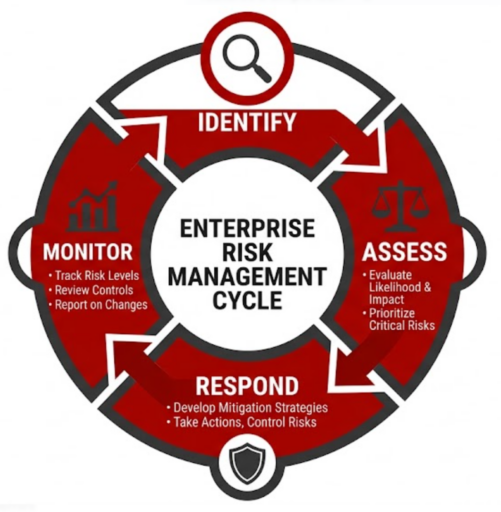
Enterprise risk management is a comprehensive, integrated process that organizations use to identify, assess, respond to, and monitor risks across every function and business unit. Unlike departmental or siloed risk management — where individual teams manage their own risks in isolation — ERM takes an organization-wide view.
The goal is not to eliminate risk entirely, which is neither realistic nor desirable. Risk is inherent in all business activity. Instead, ERM helps organizations understand the full landscape of risks they face, evaluate which risks are acceptable, and put controls in place for those that aren’t.
ERM connects risk management to strategic objectives. It asks: what could prevent us from achieving our goals, and what systems do we have in place to detect and address those threats?
Why Organizations Adopt ERM
Formal ERM programs have grown significantly over the past two decades, driven by several converging pressures:
- Regulatory expectations: Regulators across industries increasingly expect organizations to demonstrate proactive, documented risk management. The Department of Justice (DOJ), the SEC, and industry-specific bodies have all signaled that inadequate risk oversight can constitute a compliance failure.
- Board and audit committee oversight: Boards have a fiduciary responsibility to understand and oversee organizational risk. ERM provides the structure and reporting mechanisms that make this oversight possible.
- Business complexity: Globalization, digital transformation, and supply chain interdependencies have multiplied the number of risks organizations face and the speed at which they can escalate.
- Stakeholder expectations: Investors, customers, and employees increasingly expect organizations to operate with transparency and accountability, particularly around ethics, safety, and compliance.
Key Components of an Enterprise Risk Management Framework
Risk Identification
Effective ERM begins with systematically identifying what could go wrong. Organizations use a variety of methods — risk workshops, interviews, operational data analysis, and benchmarking — to surface risks across all functions, geographies, and business units.
Risk categories typically include strategic risks, operational risks, financial risks, legal and compliance risks, reputational risks, and emerging or external risks such as cybersecurity threats or geopolitical instability. A complete risk inventory ensures that nothing falls through the cracks because it doesn’t fit neatly within one department’s scope.
Risk Assessment and Prioritization
Once risks are identified, they must be evaluated. Risk assessment typically considers two dimensions: the likelihood that a risk event will occur, and the potential impact if it does. This analysis allows organizations to prioritize their attention and resources.
Risk heat maps and scoring matrices are common tools for visualizing this assessment. High-likelihood, high-impact risks receive immediate attention. Lower-priority risks are monitored over time. The goal is to allocate risk management resources where they will have the greatest effect.
Risk Response and Mitigation Strategies
With risks assessed and prioritized, organizations define their response strategies. The four primary approaches are:
- Avoidance: Eliminating the activity or condition that gives rise to the risk.
- Reduction: Implementing controls that decrease the likelihood or impact of the risk.
- Transfer: Shifting the financial exposure of the risk to a third party, such as through insurance or contractual arrangements.
- Acceptance: Acknowledging the risk and monitoring it, when the cost of mitigation exceeds the expected cost of the risk itself.
The appropriate response depends on the organization’s risk appetite — the level of risk it is willing to tolerate in pursuit of its strategic objectives.
Monitoring and Ongoing Review
Enterprise risk management is not a one-time exercise. Risk environments change constantly. New regulations emerge, business conditions shift, and new threats develop. Effective ERM programs build in continuous monitoring through key risk indicators (KRIs), regular reassessments, and reporting channels that surface emerging issues in real time.
Monitoring also requires feedback loops. When a reported concern is investigated and resolved, that information should flow back into the ERM process and inform future risk assessments.
Enterprise Risk Management Frameworks and Standards
Several established frameworks guide the design and implementation of ERM programs. The two most widely referenced are:
- COSO ERM Framework: Developed by the Committee of Sponsoring Organizations of the Treadway Commission, the COSO ERM framework is the most widely adopted standard in the United States. It defines ERM as a process that enables organizations to manage risk in alignment with strategy and performance. The 2017 update explicitly connected ERM to strategic planning and value creation.
- ISO 31000: An international standard published by the International Organization for Standardization, ISO 31000 provides principles and guidelines for risk management applicable to organizations of any size or sector. For a primer on ISO 31000, visit the ISO Risk Management overview.
How Regulatory Guidance Shapes ERM
Regulatory expectations reinforce the need for formalized ERM. The DOJ’s guidance on evaluating compliance programs places significant weight on whether organizations have proactive, documented risk management processes. The U.S. Sentencing Guidelines credit organizations with effective compliance programs when they can demonstrate ongoing risk assessment and monitoring. Industry-specific regulators — in financial services, healthcare, energy, and other sectors — have parallel requirements that embed ERM expectations into licensing and oversight frameworks.
Why Enterprise Risk Management Matters
Protecting the Organization from Financial and Legal Exposure
Organizations that identify and address risks early avoid the far greater costs of reactive response. A compliance failure that goes undetected can result in regulatory penalties, civil litigation, remediation costs, and reputational damage that far exceeds the cost of the controls that might have prevented it. ERM shifts the posture from reactive to proactive — reducing exposure by addressing root causes before they produce consequences.
Supporting Governance and Board Oversight
Boards and audit committees cannot fulfill their oversight responsibilities without reliable information about organizational risk. ERM provides the structure, language, and reporting cadence that connects risk management activity to board-level governance. Regular risk reporting to the board ensures that decision-makers have the visibility they need to ask the right questions and hold management accountable.
Building a Culture of Accountability and Transparency
ERM is not just a compliance function — it reflects and reinforces organizational culture. Organizations with mature ERM programs tend to have stronger ethical cultures, because both depend on the same foundational behaviors: transparency, accountability, and a willingness to surface and address problems honestly.
When employees understand that the organization takes risk seriously and provides safe channels to raise concerns, they are more likely to report problems early. Early reporting is one of the most powerful risk management tools an organization has.
| Key Elements of an Effective ERM Program |
| • Organization-wide risk identification process |
| • Consistent risk assessment and prioritization methodology |
| • Clear risk response and mitigation strategies |
| • Confidential employee reporting channels |
| • Case management and documentation tools |
| • Regular monitoring, review, and board reporting |
The Role of Reporting Systems in Enterprise Risk Management
Why Internal Reporting is a Critical ERM Input
Some of the most valuable risk intelligence in any organization comes from employees. Reports of misconduct, safety concerns, policy violations, and ethical lapses are early indicators of problems that, left unaddressed, can become significant organizational risks. For ERM to function effectively, these reports need to reach decision-makers before they escalate.
Internal reporting channels transform anecdotal concerns into documented risk data that can be analyzed, investigated, and incorporated into the ERM process. Without a reliable mechanism for surfacing employee concerns, organizations are operating with an incomplete view of their risk landscape.
Encouraging Employees to Surface Risk Early
The primary barrier to internal reporting is fear — fear of retaliation, fear of being wrong, or fear that nothing will happen. Confidential and anonymous reporting channels address these barriers directly. When employees know their identity is protected and their concerns will be taken seriously, they are significantly more likely to report.
An independent third-party hotline adds a further layer of trust. Employees who are skeptical of reporting to an internal HR department may be more willing to use an external, professionally managed channel.
Documenting and Tracking Risk Through Case Management
Receiving a report is only the first step. Organizations need systems to log, investigate, track, and analyze reported concerns over time. Case management tools allow compliance and risk teams to document their investigative process, record outcomes, and identify patterns — for example, whether similar concerns are being raised across multiple locations or business units.
This trend data is directly useful to ERM. It allows organizations to see where systemic risks are developing and to adjust their risk assessments and controls accordingly.
How Red Flag Reporting Supports Enterprise Risk Management
Independent Ethics Hotline and Whistleblower Reporting
As a trusted ethics and compliance Provider, Red Flag Reporting gives employees a confidential, professionally managed channel to report concerns — available 24/7 by phone, web, or mobile. Because the hotline is operated independently from the organization, employees can report with confidence that their identity will be protected and their concern will be documented.
Every report received through Red Flag Reporting’s system becomes a documented risk data point. Over time, the volume, category, and content of reports provides compliance and risk teams with meaningful insight into where concerns are developing across the organization.
Case Management Tools for Risk Documentation
Red Flag Reporting’s platform includes case management functionality that allows organizations to track reported concerns from intake through investigation and resolution. Cases are logged, timestamped, and categorized — creating an auditable record that supports both internal investigations and regulatory documentation.
The ability to analyze case data over time — identifying trends, recurring issues, and emerging patterns — makes the platform a direct contributor to ERM monitoring and review processes. Risk and compliance teams can see not just individual incidents, but systemic signals that warrant broader attention.
Implementation and Next Steps
A strong enterprise risk management program depends on early detection. If your organization’s current reporting infrastructure is not generating the risk intelligence your ERM program needs, it may be time to evaluate your options.
Red Flag Reporting’s services provide organizations with a reliable, independent reporting and case management solution designed to integrate with your existing ERM framework. To learn how Red Flag Reporting can support your program, contact us today.
Frequently Asked Questions About Enterprise Risk Management
| Q1: What is the difference between enterprise risk management and traditional risk management? |
| Traditional risk management is typically handled at the departmental level, with individual functions managing their own risks independently. Enterprise risk management takes an organization-wide view, integrating risk identification and oversight across all business units and aligning risk management with strategic objectives. ERM connects risk data across silos, enabling leadership and the board to see the full picture rather than isolated pieces of it. |
| Q2: What is an enterprise risk management framework? |
| An enterprise risk management framework is a structured methodology for identifying, assessing, responding to, and monitoring risks. The two most widely adopted frameworks are the COSO ERM Framework and ISO 31000. These frameworks provide a common language and process that organizations use to design and implement their ERM programs consistently across the enterprise. |
| Q3: What are enterprise risk management tools? |
| Enterprise risk management tools include the systems and platforms that support ERM processes. These range from risk assessment matrices and heat maps to specialized software platforms for risk tracking, reporting, and case management. Ethics hotlines and confidential reporting channels are also important ERM tools, as they generate the risk intelligence that feeds into risk identification and monitoring processes. |
| Q4: How does an ethics hotline support an enterprise risk management strategy? |
| An ethics hotline provides a confidential channel through which employees can report misconduct, compliance concerns, safety issues, or policy violations. These reports are early indicators of emerging organizational risks. By capturing and documenting employee concerns, an ethics hotline generates risk data that feeds directly into the ERM process — helping organizations detect issues before they escalate into significant legal, financial, or reputational problems. |
| Q5: What is an enterprise risk management solution? |
| An enterprise risk management solution is a platform, program, or set of tools that supports an organization’s ERM program. This can include risk management software, case management systems, and third-party reporting services like an ethics hotline. The right ERM solution helps organizations systematically collect risk data, investigate concerns, track trends, and document their risk management activities in a way that supports both internal governance and regulatory compliance. |