
What is a Sentinel Event?
Definition, Response, and Prevention
Definition and Overview
A sentinel event is a rare, high-severity incident that signals a potentially serious breakdown in an organization’s systems — one significant enough to trigger immediate escalation, structured investigation, and corrective action.
In cross-industry compliance and risk management, the term is often used as shorthand for “sentinel-level” events: incidents that either cause major harm or reveal conditions under which major harm is plausibly imminent if the underlying weakness isn’t corrected.
The word sentinel means a guard or watchperson — and a sentinel event serves that role by alerting leadership that “normal controls didn’t hold” and the organization must learn quickly to prevent recurrence. Ignore the signal, and you invite the same failure again. Investigate it thoroughly, and you create an opportunity to prevent the next one.
| Note — Healthcare Usage:
The Joint Commission uses “sentinel event” as a formal term for a patient safety event (not primarily related to the natural course of the patient’s illness or underlying condition) that reaches a patient and results in death, severe harm, or permanent harm. It also treats certain defined event categories — for example, wrong-site/wrong-patient/wrong-procedure surgery or invasive procedures — as sentinel because they signal the need for immediate investigation and response regardless of the magnitude of the outcome. Joint Commission policy also recognizes certain events as sentinel even when death, permanent harm, or severe harm does not occur, because they still signal the need for immediate investigation and response. Reporting sentinel events to the Joint Commission is strongly encouraged but generally voluntary, even though accredited organizations are expected to maintain a process for analyzing and addressing such events. |
Sentinel-Level Events vs. Other Organizational Incidents
Not every workplace incident qualifies as a sentinel-level event. Understanding the distinction matters because the level of response required — and the urgency of that response — differs significantly.
Routine incidents, minor operational issues, safety concerns, or low-severity complaints may be handled through standard internal procedures without triggering an organization-wide investigation. A sentinel-level event, by contrast, rises to a different threshold. It typically involves one or more of the following:
- Catastrophic or severe harm to an individual (death, life-altering injury, or comparable severe impact), or a credible near-catastrophe where harm was avoided by luck or last-minute intervention.
- A major control failure that materially compromises safety, legality, integrity, or continuity of operations.
- A serious violation of law, policy, or ethical standards with significant organizational consequence (e.g., regulatory exposure, major loss, systemic misconduct).
- A fundamental departure from expected and acceptable outcomes that indicates the system is not performing as designed.
Because “sentinel event” is defined differently across sectors, organizations benefit from clearly defining “sentinel-level” events in a way that fits their risk profile and regulatory environment. This removes ambiguity and ensures that employees and managers know precisely when escalation is required.
Why Sentinel-Level Events Require Immediate Response
The Cost of Delayed Reporting and Investigation
When a sentinel-level event occurs, the clock starts immediately. Evidence can be lost, witnesses’ recollections can fade, and systems can be altered — intentionally or inadvertently — before investigators have a chance to capture what actually happened. Every hour of delay compounds the risk.
Delayed reporting also allows harm to continue or escalate. If a systemic failure caused one serious incident, that same failure remains in place until it is identified and corrected. Organizations that do not act quickly leave themselves — and the people they serve — exposed to ongoing risk.
From a legal and regulatory standpoint, delayed investigation creates additional vulnerability. Courts and regulators often look not just at what happened, but at how quickly and thoroughly an organization responded. A well-documented, timely investigation demonstrates good-faith effort and organizational accountability. A delayed or incomplete one raises questions about whether the organization took the matter seriously.
This is precisely why having a reliable, always-available reporting channel is so critical. When employees and managers have an easy, trusted way to report a serious incident the moment it occurs, organizations receive the information they need to act before additional harm is done.
Regulatory and Organizational Obligations
Regulatory expectations vary by industry and event type. In healthcare, Joint Commission-accredited organizations are expected to have a process to analyze and respond to sentinel events, typically including a comprehensive systematic analysis — often a root cause analysis — and a corrective action plan. Reporting events to the Joint Commission is strongly encouraged but is generally voluntary.
For workplace safety incidents, OSHA requires employers to report a work-related fatality within 8 hours and an in-patient hospitalization, amputation, or loss of an eye within 24 hours — generally measured from when the employer learns of the reportable outcome. (Reporting applicability and timing also depend on specific rule conditions, such as the time elapsed between the incident and the reportable outcome.) These timeframes make rapid internal detection and reporting essential: organizations cannot meet external reporting obligations unless their own intake processes are already running.
In cybersecurity regulation, NYDFS Part 500 requires covered entities to maintain a written incident response plan that includes documentation/reporting and post-incident analysis (including root cause analysis) — illustrating how sentinel-level event response obligations have expanded well beyond traditional safety or healthcare contexts.
Even organizations that do not operate under specific sentinel-level event regulations have compelling reasons to respond quickly and thoroughly. The duty of care owed to employees, customers, and communities creates both legal and ethical obligations. Depending on the facts and jurisdiction, executives and board members may face heightened scrutiny and potential personal exposure if a serious incident is mishandled or ignored. And the reputational cost of a poorly managed sentinel-level event — particularly if it becomes public — can far exceed the immediate harm of the incident itself.
The standard that regulators, courts, and the public apply is increasingly demanding: organizations are expected not just to respond, but to respond well.
Key Elements of a Sentinel-Level Event Policy
Defining What Qualifies as a Sentinel-Level Event
The foundation of any effective sentinel-level event policy is a clear, organization-specific definition of what constitutes a sentinel-level event. Without clear criteria, even well-intentioned employees may not recognize when they are looking at something that requires immediate escalation — or may over-escalate routine incidents, creating unnecessary disruption.
Because “sentinel event” is defined differently across sectors, organizations should define sentinel-level events in a way that fits their risk profile and regulatory environment. A workable definition will typically reference severity thresholds (death, serious injury, significant financial harm, major compliance violations), unexpected or unplanned outcomes, and situations where the organization’s core obligations to its stakeholders were fundamentally breached. Industry-specific examples and scenarios help employees apply the definition confidently in real situations.
Escalation and Notification Requirements
Once a sentinel-level event occurs or is reported, who needs to know — and how quickly? A well-designed policy will answer these questions explicitly. The escalation matrix for a sentinel-level event typically reaches further and faster than for routine incidents.
At a minimum, the policy should specify:
- The chain of notification, including compliance, legal, HR, and executive leadership
- Time requirements for each level of escalation (e.g., within 1 hour, within 24 hours)
- The reporting channels through which the event should be documented
- Whether external notification to regulators, insurers, or law enforcement is required
The escalation protocol should be simple enough to follow under pressure. In the immediate aftermath of a serious incident, clarity of procedure matters enormously.
Investigation and Documentation Standards
The policy should also define what a proper investigation looks like: who conducts it, what methodology is used, what must be documented, and how findings are translated into corrective action. Investigation standards ensure consistency across incidents and provide a defensible record that demonstrates the organization’s commitment to accountability.
Documentation standards should specify how investigation records are maintained, who has access to them, how long they are retained, and how they connect to the organization’s broader corrective action tracking.
| Key Elements of a Sentinel-Level Event Response Program |
| • Clear, organization-specific criteria defining what qualifies as a sentinel-level event |
| • Always-available reporting channel for immediate, structured intake |
| • Defined escalation and notification requirements |
| • Structured investigation process, such as root cause analysis |
| • Corrective and preventive action planning tied to investigation findings |
| • Documentation standards that support defensibility and audit readiness |
Investigating a Sentinel-Level Event
Starting with a Complete Incident Report
Every sentinel-level event investigation begins with the initial report. The quality and completeness of that first document shapes everything that follows. Investigators who receive a detailed, structured report can move quickly to preserve evidence, identify witnesses, and begin tracing the chain of events. Investigators who receive an incomplete or vague report must spend time and resources filling gaps that may never fully close.
This is why the design of the reporting channel matters so much. Structured intake — where reporters are guided through key fields covering who, what, when, where, and how — produces far better information than a free-form email or an informal verbal notification. Organizations that invest in quality reporting infrastructure see it pay dividends every time a serious incident occurs.
Applying Root Cause Analysis to Sentinel-Level Events
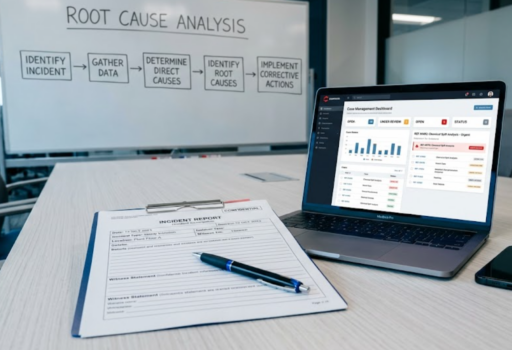
A widely used investigative methodology for sentinel-level events is root cause analysis (RCA) — a structured approach for identifying systemic contributors and designing controls that prevent recurrence. Unlike a surface-level investigation focused on who made a mistake, RCA is designed to uncover the conditions that made the incident possible in the first place.
RCA asks questions like:
- What process or system failed, and why?
- Were there warning signs that were missed or ignored?
- What policies, training gaps, or oversight failures contributed to the outcome?
- What would need to change to make a recurrence unlikely?
The goal of RCA is not to assign blame, but to identify and address the root drivers of the failure. Findings should feed directly into corrective actions, with clear ownership, timelines, and metrics for evaluating whether the changes are effective.
The Joint Commission and other standards bodies offer frameworks for root cause analysis that can be adapted to non-healthcare settings. Learn more about root cause analysis methodology from the Joint Commission’s Sentinel Event resources.
Documenting Findings for Defensibility and Improvement
Investigation documentation serves a dual purpose. First, it creates the evidentiary record that demonstrates the organization responded in good faith: that it took the event seriously, conducted a thorough investigation, identified root causes, and implemented corrective actions. This record can be critical in regulatory proceedings, litigation, or audit reviews.
Second, investigation documentation is an organizational learning asset. Each completed investigation adds to the body of knowledge about where systems have failed and what interventions have worked. Over time, a well-maintained investigation record helps organizations identify patterns, prioritize risk mitigation, and build a culture of continuous improvement.
How Red Flag Reporting Supports Sentinel-Level Event Reporting and Investigation
A Reporting Channel Built for Rapid, Structured Intake
As a trusted hotline provider, Red Flag Reporting gives employees and managers a trusted, always-available channel to report serious incidents the moment they occur. Available 24/7/365 — by phone, web portal, text, email, or fax — the Red Flag Reporting hotline ensures that organizations receive the information they need to act before additional harm is done.
Reports are captured in a structured format that guides reporters through the key details investigators need, reducing incomplete intake and improving the quality of information from the very first notification. Multi-language capability — supporting 200+ languages by phone and 100+ languages via the web portal — ensures that language is never a barrier to timely reporting.
Case Management Tools That Support Investigation and Documentation
Red Flag Reporting’s hotline services include a powerful case management platform that allows compliance and investigation teams to do far more than just receive reports. Teams can log and track sentinel-level event cases from initial report through final resolution, assign investigative tasks, document findings, and track corrective actions to closure in a complete, auditable record of the organization’s response.
The platform also supports anonymous two-way communication between investigators and reporters, allowing follow-up questions to be asked and answered without compromising reporter confidentiality. Trend analysis and reporting tools help compliance leaders identify patterns across incidents over time, enabling proactive risk management rather than purely reactive response.
Implementation and Next Steps
When a sentinel-level event occurs, the speed and quality of the response depends entirely on the infrastructure behind it. Organizations that have invested in a reliable reporting channel and structured case management system are far better positioned to respond quickly, document thoroughly, and demonstrate accountability to regulators, boards, and the public.
If your organization has not recently assessed whether its current reporting and investigation infrastructure is equipped to handle a sentinel-level event effectively, now is the time to do so. Key questions to consider:
- Is your reporting channel available 24/7, including by phone for employees without computer access?
- Does intake capture the structured detail investigators need to begin work immediately?
- Can your case management system track investigation findings and corrective actions to closure?
- Does your documentation create a defensible record if the incident is reviewed externally?
Red Flag Reporting is ready to help. Contact us today to learn how our hotline and case management solutions can support your organization’s sentinel-level event readiness.
Frequently Asked Questions About Sentinel Events
| Q1. What is the difference between a sentinel event and a near-miss?
A near-miss is an incident where something went wrong but serious harm was avoided — often by chance or last-minute intervention. A sentinel-level event is an incident severe enough (or revealing enough) to require immediate escalation and a structured investigation because it signals a system vulnerability with potentially serious consequences. In healthcare, “sentinel event” also carries a formal, sector-specific definition and reporting expectations; outside healthcare, organizations often adapt the term to fit their own high-severity incident criteria. |
| Q2. Is sentinel event reporting required by law?
In some areas, yes — but requirements depend on the industry and event type. OSHA, for example, requires rapid reporting of specific severe outcomes: fatalities within 8 hours; in-patient hospitalization, amputation, or loss of an eye within 24 hours. In healthcare, reporting sentinel events to the Joint Commission is generally voluntary, though accredited organizations are expected to maintain processes for analysis and corrective action. Outside these regulated contexts, most organizations still have strong legal, ethical, and reputational reasons to investigate and document serious incidents promptly. |
| Q3. What should be included in a sentinel event investigation report?
A thorough sentinel event investigation report should include: a complete description of the event (what happened, who was involved, when, where, and how); an analysis of immediate causes and contributing factors; a root cause analysis identifying systemic drivers; corrective action steps with assigned ownership and timelines; and documentation of how findings will be used to prevent recurrence. The report should also include evidence of leadership review and approval of the corrective action plan. |
| Q4. How does an ethics or compliance hotline support sentinel event reporting?
An ethics and compliance hotline provides a trusted, always-available channel for employees and managers to report serious incidents immediately — even outside of business hours. This matters because rapid intake is one of the most important factors in sentinel-level event response. A well-designed hotline captures structured, detailed reports that give investigators the information they need from the start. Paired with a case management system, it creates a complete, auditable record of the organization’s response from first report through corrective action closure. |
| Q5. How does root cause analysis differ from a standard workplace investigation?
A standard workplace investigation often focuses on establishing facts and determining accountability: what happened, who was responsible, and whether policy was followed. Root cause analysis goes deeper, asking why the failure occurred and what systemic conditions made it possible. Rather than assigning individual blame, RCA is designed to identify the process, training, oversight, or design failures that need to be corrected to prevent the same incident from happening again. RCA is widely recognized as a best-practice methodology for sentinel-level event investigations across industries. |