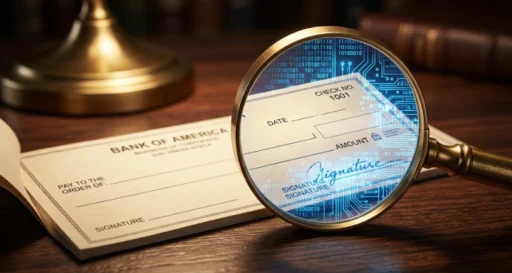
Document Fraud: 6 Powerful Detection Tools Every Organization Needs
Document fraud has increased dramatically in recent years. In fact, according to the U.S. Treasury’s Financial Crimes Enforcement Network, check fraud, alone, was reported in more than 350,000 Suspicious Activity Reports (SARs) in 2021 and more than 680,000 in 2022. The prevalence of document fraud can partially be explained by instability caused by the COVID-19 pandemic as well as technological advancements that make it easier to alter documents with increasingly realistic results. That said, technological advancements are also being used to combat document fraud in new and better ways. The following will summarize key takeaways from the Fraud Magazine article, “Detecting Document Fraud,” by Dustin J. Eaton, CFE, and Theodore Colon, J.D.
Why the Opportunity to Commit Document Fraud Has Grown
According to the article, a variety of factors have contributed to an increased opportunity to commit document fraud. Notably, the increased sharing of sensitive information online during the COVID-19 pandemic, newfound access to federal money via pandemic relief programs, and economic uncertainty have all created opportunities for fraud to occur.
During the pandemic, people and organizations began to rely on online platforms more than ever before, using them to complete a variety of tasks that required the sharing of sensitive information. This made it easier for fraudsters to access, steal, and use this information for illegal purposes. Individuals and organized groups also took advantage of government relief funds, falsifying documents to collect money that they did not qualify to receive. Desperation caused by economic downturn and uncertainty also compelled individuals to rationalize and commit fraud, often for the first time.
3 Types of Document Fraud
Given the fact that document fraud is on the rise, what should organizations be watching for? The article defines three major categories of document fraud. These include counterfeits, forged/altered documents, and fake documents. Counterfeits are documents that mimic authentic documents authorized by an issuing authority. Forged or altered documents are authentic documents that are altered without the consent of the original owner or issuer. Fake documents are not created to mimic a genuine document. That said, they contain information that is designed to deceive or mislead a victim. Fraudsters often use fraudulent checks, government issued IDs, pay stubs, invoices, and tax forms for personal gains, making these the documents most worth scrutinizing for signs of document fraud.
Preventing Document Fraud with 6 Detection Tools
The article recommends utilizing a variety of risk management tools to prevent document fraud. Importantly, the authors stress the importance of pulling data from multiple sources in order to verify authenticity. They recommend choosing or creating document fraud risk management tools that include the following features:
Document forensics: Digital document forensic tools can be used to detect earlier versions of a document, inconsistent fonts, software used to create a document, and discrepancies between documents.
X-ray and metadata analyses: These tools use artificial intelligence to detect changes to documents. They can determine who created a document and when it was created or modified. They can also determine what software was used to create a document and can detect and describe embedded text.
Template detection: Fraudsters often sell or use templates to create falsified documents. Template detection tools can identify when seemingly genuine documents have been created using a template.
Blocklists or watchlists: Blocklists and watchlists contain information about individuals known to have committed fraud. A new customer’s information can be compared to this information to weed out repeat offenders.
Two-way matching: Text recognition software can be used to identify discrepancies between documents. For example, a fraudster may try to provide information that does not match what is found on submitted documents.
Network or database detectors: Network or database detectors screen new documents for fraud indicators by comparing them to a large archive of both fraudulent and authentic documents.
Staying Ahead of Document Fraud
To close, the authors highlight the importance of staying informed and adapting your document fraud detection and prevention policies to address emerging concerns. As always, information and policies should be effectively communicated with all members of an organization so that everyone can do their part to combat document fraud. Don’t forget, according to the ACFE’s 2022 Report to the Nations, tips were the most common method used to detect occupational fraud, accounting for 42% of cases. Regularly educating your employees on the existence of your independent hotline will encourage them to “say something” when they “see something.”
Want to learn more about modern methods being used to commit fraud? See our article here.
Protect Your Organization from Document Fraud
Detection software can flag an altered pay stub or a templated invoice, but employees are often the first to notice that something doesn’t add up. An independent, anonymous hotline gives them a safe way to report suspected document fraud, theft, and misconduct before losses grow. As a trusted hotline provider, Red Flag Reporting offers 24/7 hotline services with no administrator license fees. Contact us to learn how we can help your organization strengthen its defenses against document fraud.
Document Fraud FAQs
What is document fraud?
Document fraud is the creation, alteration, or use of false documents to deceive someone, usually for financial gain. It can involve checks, IDs, pay stubs, invoices, tax forms, and other records an organization relies on to make decisions.
What are the three main types of document fraud?
The three main types are counterfeits, which mimic authentic documents from an issuing authority; forged or altered documents, which are genuine documents changed without the owner’s or issuer’s consent; and fake documents, which don’t copy a real document but contain information designed to mislead.
Why has document fraud increased?
The COVID-19 pandemic pushed more sensitive information online, pandemic relief programs created new targets, and economic uncertainty pressured some people to rationalize fraud. At the same time, editing software has made altered documents look more convincing than ever.
How can organizations detect document fraud?
The most effective approach combines several tools and verifies information against multiple sources. Options include digital document forensics, metadata analysis, template detection, blocklists or watchlists, two-way matching, and network or database detectors that compare new documents against known fraudulent and authentic examples.
How does a fraud hotline help prevent document fraud?
Tips are the most common way occupational fraud is uncovered. In the ACFE’s Occupational Fraud 2022: A Report to the Nations, 42% of cases were detected by a tip, far more than the next most common method, internal audit (16%), and more than half of tips came from employees. An independent hotline gives employees a safe, anonymous way to report suspected document fraud they encounter on the job.
Accuracy fix: the ACFE study current in August 2023 (2022 Report to the Nations) found 42% of occupational frauds were detected by a tip. That is the most common detection method, but not a majority, and the ACFE measures occupational fraud only, not “fraud of all types.” The new wording states the finding as the report gives it.
Please confirm this existing internal link is still live on the site, and point it to the current URL if not. I left it as is.
Reach Us
Red Flag Reporting
P.O. Box 4230, Akron, Ohio 44321
Tel: 877-676-6551
Fax: 330-572-8146