AI Fraud: How to Spot and Prevent AI-Assisted Schemes
February 22, 2023
AI fraud is the use of artificial intelligence to deceive people or organizations for financial or personal gain. Artificial Intelligence (AI) is a type of technology that simulates human intelligence in its ability to learn, problem solve, and make decisions, among other complex processes.
As the field of artificial intelligence continues to advance, organizations and individuals must anticipate and prevent AI fraud.
The Association of Certified Fraud Examiners (ACFE) recently reported on the dangers of AI fraud in the ACFE Insights article, “AI Fraud: The Hidden Dangers of Machine Learning-Based Scams” by Laura Harris, CFE, an ACFE research specialist. In the following, we will summarize key takeaways from the article.
Why People Use AI to Commit Fraud
Harris identifies a variety of reasons that may compel people to use AI for fraudulent purposes. People typically commit fraud for personal gain.
It’s important to remember that AI, in itself, is not problematic. Instead, problems arise when people use AI as a tool to obtain personal gain through dishonesty or deception. In fact, Harris notes that AI can also be used to detect and prevent fraud by analyzing data and identifying patterns that may indicate fraudulent activity.
Fraudsters turn to AI due to its speed, efficiency, and automaticity. AI can process large amounts of data quickly and can perform a variety of tasks instantly and automatically. In other words, fraudsters turn to AI for the same reason as those using it for legitimate purposes.
AI also allows for anonymity and evasion of detection. AI fraud is difficult to trace back to humans, and it is often difficult for humans to detect fraudulent information created by AI.
Common AI Fraud Schemes to Watch For
Falsification of Documents
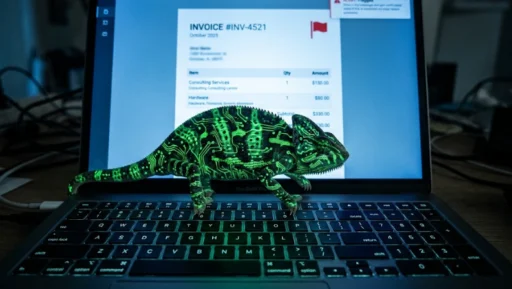
AI can be used to generate fake documents, such as contracts, invoices, checks, and sales records. These documents can then be used to commit or conceal schemes such as asset misappropriation.
Scam Calls and Phishing
AI can be used to send out mass emails, calls, and text messages requesting money or personal information. AI is able to generate human-like text and speech, leading victims to believe that they are communicating with a legitimate person. Fraudsters may also use AI to spoof phone numbers or email addresses so that messages appear to come from a legitimate source.
Impersonation
In addition to generating human-like text and speech, artificial intelligence can actually be trained to mimic a specific person! It can do so by matching an individual’s style, tone, and language patterns.
Some AI systems can even generate fake images and videos of a target individual. Fraudsters can impersonate trusted individuals to request money or access confidential information. AI can also be used to manipulate online profiles or generate fake social media activity, making an impersonation even more convincing.
How to Prevent AI Fraud
Harris shares the following recommendations for organizations and individuals:
- Use strong security measures, such as two-factor authentication, unique passwords for different accounts, and keeping software and security protocols up to date.
- Watch out for writing that lacks style and tone, is repetitive or formulaic, lacks cohesion, includes contextually irrelevant content, or contains grammar and syntax errors. These can all be warning signs that the writing may have been generated by artificial intelligence. However, Harris cautions that AI-generated writing is becoming increasingly difficult to distinguish from human writing.
- Verify the authenticity of information and communications, especially before sharing confidential information.
- Be wary of unsolicited requests for personal information or offers that seem too good to be true.
- Report known or suspected fraudulent activity to the appropriate authorities or organizations.
Why a Hotline Matters in the Fight Against AI Fraud
Organizations must protect themselves from all types of fraud, including AI fraud. All members of an organization must remain vigilant when it comes to detecting and reporting fraud.
Employees should be trained to identify and report suspected fraud. Implementing the use of a third-party hotline, such as Red Flag Reporting, provides employees with a clear pathway for voicing their concerns.
When everyone is equipped to detect and report fraudulent activity, losses are minimized.
To learn more on cyber-safety, see our article, 6 Steps to Cyber Safety: What You Need to Know Now.
Protect Your Organization from AI Fraud
AI fraud often slips past technology, but it rarely slips past everyone. The employee who notices an odd invoice or an unusual request needs a simple, confidential way to speak up. Contact us to learn how Red Flag Reporting’s hotline services can give your employees and stakeholders a trusted channel for reporting suspected fraud and misconduct.
Frequently Asked Questions About AI Fraud
What is AI fraud?
AI fraud is the use of artificial intelligence to deceive people or organizations for financial or personal gain. Examples include generating fake documents, automating phishing scams, and impersonating real people. AI itself is not inherently fraudulent; the problem is how people choose to use it.
Why do fraudsters use AI?
Fraudsters use AI for the same reasons legitimate users do: speed, efficiency, and automation. AI also offers anonymity and can produce convincing content that is hard for people to identify as fake, which helps AI fraud evade detection.
What are the most common AI fraud schemes?
Common schemes include falsified documents such as contracts and invoices, mass phishing emails, texts, and calls, and impersonation of trusted individuals through text, speech, images, or video that mimic a real person.
How can you tell if a message was written by AI?
According to the ACFE, warning signs may include writing that lacks a natural style and tone, is repetitive or formulaic, lacks cohesion, includes irrelevant content, or contains grammar and syntax errors. Because AI writing keeps improving, the safest approach is to verify unusual requests through a separate, trusted channel.
How can organizations prevent AI fraud?
Organizations can reduce AI fraud risk by using two-factor authentication and unique passwords, keeping software up to date, verifying requests before sharing confidential information, and training employees to recognize red flags. A fraud hotline also gives employees a confidential way to report suspicious activity before losses grow.
Reach Us
Red Flag Reporting
P.O. Box 4230, Akron, Ohio 44321
Tel: 877-676-6551
Fax: 330-572-8146