
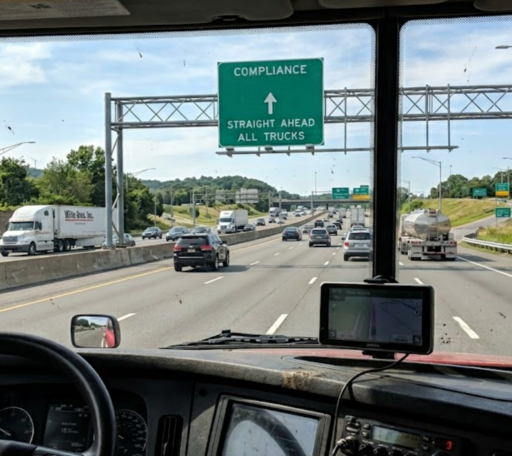
The transportation and logistics industry moves the American economy. Every day, hundreds of thousands of drivers, dispatchers, brokers, warehouse workers, and supply chain managers keep goods flowing across the country. But underneath that essential activity runs a powerful current of risk — regulatory pressure, safety violations, cargo fraud, driver misconduct, and workplace ethics failures that can derail an organization in ways that no fleet manager or compliance officer wants to face.
A transportation compliance hotline is one of the most effective tools available to keep those risks in check. Yet many trucking and logistics companies still operate without one. This article explains why that gap is dangerous — and what your organization stands to gain by closing it.
The Unique Compliance Pressures Facing Transportation and Logistics
Few industries carry the regulatory burden that transportation and logistics companies do. The Federal Motor Carrier Safety Administration (FMCSA) governs everything from driver qualifications to hours of service (HOS) to vehicle maintenance records. The Department of Transportation (DOT) sets safety standards that affect every commercial vehicle on the road. OSHA regulates warehouse and loading dock environments. And that’s before factoring in environmental requirements, hazmat rules, and state-level regulations that vary across every market a carrier may serve.
FMCSA has increasingly relied on off-site investigations and data-driven compliance reviews, reducing advance notice and increasing the need for continuous readiness. The financial consequences of falling short are significant: civil penalties can reach tens of thousands of dollars per violation, with severe or repeated violations carrying even higher aggregate fines — consequences that can quickly threaten a carrier’s operating authority, insurance standing, and customer relationships.
In this environment, a compliance hotline is not a luxury. It is a necessity.
1. Cargo Theft and Freight Fraud Are at Record Levels
The transportation industry is facing a fraud crisis unlike anything seen before. CargoNet’s annual analysis reported record-breaking cargo theft activity across the United States and Canada in 2024: freight theft increased 27% from 2023 levels, with the estimated average value per theft rising to over $202,000.
In early 2026, Verisk CargoNet reported that estimated cargo theft losses surged 60% in 2025 to nearly $725 million, a sign that organized criminal groups are becoming more selective and targeting higher-value freight.
Strategic theft — a type of cargo theft involving deception targeting supply chain vulnerabilities to mislead shippers, brokers, and carriers — has skyrocketed since the pandemic, increasing a staggering 1,500% since the first quarter of 2021.
A transportation compliance hotline gives employees, vendors, and drivers a confidential channel to report suspicious activity before a theft or fraud scheme reaches its conclusion. Many cargo crimes succeed not because they are undetected, but because the people who notice something wrong have no clear, safe way to report it.
2. HOS Violations Put Drivers, Companies, and the Public at Risk
Hours of service compliance is one of the most persistent and high-stakes challenges in the trucking industry. Driver fatigue is a leading contributor to large truck crashes, and the data is sobering. FMCSA and NHTSA data show that large trucks are involved in hundreds of thousands of crashes annually, resulting in tens of thousands of injuries and thousands of fatalities nationwide — making the human cost of non-compliance impossible to overstate.
FMCSA conducts roughly 3 million roadside inspections annually, identifying millions of safety and compliance violations across drivers, vehicles, and carriers.
When drivers feel pressured by dispatchers or management to falsify logs or push past legal driving limits, they need somewhere to turn. A transportation compliance hotline provides that outlet — anonymously, and without fear of retaliation. It creates a safety valve that can catch a dangerous pattern before it results in a crash, a fatality, or a catastrophic lawsuit.
3. Whistleblower Protections in Transportation Are Serious Business
The Surface Transportation Assistance Act (STAA) is one of the strongest whistleblower protection statutes in U.S. law. It specifically protects transportation workers who report violations of commercial motor vehicle safety regulations — and it carries real teeth. Employees who experience retaliation for raising safety concerns can file complaints with OSHA, and employers found to have retaliated face reinstatement, back pay, and significant legal liability.
Having a well-publicized, third-party transportation compliance hotline demonstrates that your organization takes these protections seriously. It serves as a key element in demonstrating good-faith compliance and proactive efforts to prevent retaliation — an important consideration if your organization ever faces regulatory scrutiny or litigation.
4. Drug and Alcohol Testing Violations Are a Hidden Liability
The transportation industry operates under some of the strictest drug and alcohol testing requirements in the country. The FMCSA Drug & Alcohol Clearinghouse requires carriers to query the database for violations before hiring a driver and annually thereafter. Violations must be reported promptly, and return-to-duty processes must be followed precisely.
Despite these requirements, violations occur — and they are not always reported internally. A driver who witnesses a co-worker under the influence, or a manager who suspects someone is circumventing testing protocols, needs a confidential way to raise the concern. A transportation compliance hotline is designed exactly for this kind of situation, where an individual may fear workplace backlash but knows that something important needs to be reported.
5. Harassment, Discrimination, and HR Issues Don’t Stop at the Truck Stop
The transportation workforce is large, dispersed, and often working in high-pressure environments. Long-haul truck drivers spend days or weeks away from home. Warehouse workers operate in high-demand, physically taxing conditions. This creates an environment where HR issues — harassment, discrimination, bullying, retaliation — can fester without proper reporting channels.
A driver who experiences harassment at a customer’s loading dock, or a warehouse worker who observes discriminatory treatment by a supervisor, may not have easy access to an HR department. A 24/7 transportation compliance hotline with web and phone access removes that barrier entirely, giving every employee — regardless of location or shift — a reliable way to report concerns.
For more on how hotlines transform workplace culture, see our blog post From Silence to Action: 4 Ways Hotlines Transform Workplace Culture.
6. Supply Chain Integrity Depends on Ethical Vendor and Broker Relationships
Transportation and logistics companies don’t operate in a vacuum. They work with brokers, shippers, third-party logistics providers (3PLs), fuel vendors, maintenance contractors, and a web of other business partners. Each of those relationships is a potential vector for fraud, kickbacks, overbilling, and conflicts of interest.
To effectively combat freight fraud, companies need a layered approach — and empowering dispatchers and carrier representatives to spot unusual patterns, identity mismatches, or suspicious profiles that could be linked to fraudulent entities is a critical part of that strategy.
A hotline extends that reporting capability beyond your four walls. Vendors, brokers, and business partners can use it to report concerns — and your employees can use it to flag questionable vendor behavior that leadership may not be aware of.
The Transported Asset Protection Association (TAPA) is a non-regulatory, global industry body dedicated to reducing cargo crime and improving supply chain security standards. Their frameworks and research complement the internal reporting infrastructure that a compliance hotline provides, and together they represent a strong foundation for supply chain integrity.
7. Regulatory Scrutiny Is Only Going to Increase
In April 2025, FMCSA began rolling out Identity and Business Verification requirements that are changing how new applicants are vetted — part of one of the most significant anti-fraud initiatives from the agency in years. Regulatory agencies are investing more resources into transportation oversight, not less. New technologies, including data-driven enforcement tools, are making it easier for regulators to identify patterns of non-compliance across entire carrier networks.
In this climate, the organizations that will fare best are the ones that have already built a culture of proactive reporting and accountability. A transportation compliance hotline signals to regulators, employees, customers, and insurers alike that your organization is committed to doing things right — and that you have a system in place to catch problems before they escalate.
What a Transportation Compliance Hotline Should Include
Not all hotlines are created equal. A hotline designed for the transportation and logistics industry should offer:
- 24/7 availability — drivers, warehouse workers, and dispatchers work around the clock. Your reporting channel should too.
- Anonymous and confidential reporting — employees will not use a hotline they don’t trust. An independent, third-party provider removes the fear that a report will be traced back to them.
- Anti-retaliation safeguards — a credible hotline must include clear policies and processes that protect reporters from retaliation, backed by a provider who can document that those protections are in place.
- Multi-language support — the transportation workforce is one of the most linguistically diverse in the country. A hotline that only operates in English will miss a significant portion of your workforce.
- Web and phone options — some employees prefer to call; others prefer to type. Offering both maximizes utilization.
- Robust case management — receiving a report is only the beginning. Your hotline provider should offer a secure system for tracking, investigating, and resolving every report that comes in.
The Cost of Not Having One
Transportation and logistics organizations that operate without a compliance hotline are not avoiding a cost — they are deferring a much larger one. A single unreported HOS violation that results in a crash can generate millions in legal liability. A cargo theft scheme that goes undetected for months can cost far more in losses than years of hotline service fees. And a harassment claim that escalates because an employee had nowhere to turn can damage your reputation in ways that are difficult to reverse.
A transportation compliance hotline is one of the most cost-effective compliance investments your organization can make — and the organizations that use them consistently outperform those that don’t on fraud detection, regulatory outcomes, and workplace culture metrics.
Ready to Protect Your Transportation or Logistics Organization?
At Red Flag Reporting, we provide comprehensive, affordable compliance hotline services to transportation and logistics companies of all sizes — from regional carriers to national freight operations. Our system is easy to implement, trusted by organizations across the country, and designed to give your employees, vendors, and stakeholders a safe, reliable way to speak up.
Don’t wait for a violation, a crash, or a fraud scheme to reveal the gap in your compliance program. Contact us today to learn how Red Flag Reporting can help protect your drivers, your reputation, and your bottom line.