
Hotline for Food & Beverage Processors: 7 Critical Risks You Can’t Afford to Ignore
Food and beverage processing is one of the most heavily regulated industries in the United States — and for good reason. The products rolling off your lines go directly into the mouths of consumers. One safety failure, one act of fraud, one overlooked workplace hazard can trigger a recall, a regulatory shutdown, or a lawsuit that reshapes your company for years to come. Yet despite this enormous exposure, many processors still operate without a reliable, confidential channel for employees to report concerns.
A dedicated hotline for food & beverage processors fills that gap — and it may be the single most effective compliance tool your organization can add.
Why Food & Beverage Processing Demands a Different Level of Vigilance
Most industries deal with fraud, workplace misconduct, and regulatory risk. Food and beverage processors deal with all of that and a layer of risk that most sectors never face: the direct threat to public health.
When a financial services firm has an internal fraud problem, it’s bad. When a food processor has one, the consequences can include product recalls, criminal liability, and consumer injuries or deaths. The stakes are qualitatively different, and your compliance infrastructure needs to reflect that.
The Food Safety Modernization Act (FSMA), the FDA’s Current Good Manufacturing Practices (CGMPs), OSHA workplace standards, USDA requirements for meat and poultry, and the Alcohol and Tobacco Tax and Trade Bureau (TTB) regulations for beverage producers create an overlapping web of obligations. Violations can result in OSHA penalties exceeding $160,000 for repeated infractions, costly re-inspections, and — in the most serious cases — mandatory recalls and criminal referrals.
The 7 Risks a Hotline Helps Address in Food & Beverage Processing
- Food Fraud and Ingredient Adulteration
Food fraud is far more prevalent than most people realize. According to the U.S. Food and Drug Administration, expert estimates suggest food fraud affects approximately 1% of the global food industry, at a cost of $10–$40 billion annually. More recent projections from academic researchers push that figure even higher.
Adulteration can happen inside your own supply chain — or inside your own facility. Employees who observe ingredient substitution, mislabeling, or falsification of quality records are often the first and only line of defense. A confidential hotline for food & beverage processors gives those employees a safe, anonymous path to report what they see, without fear of retaliation.
- Safety Violations on the Production Floor
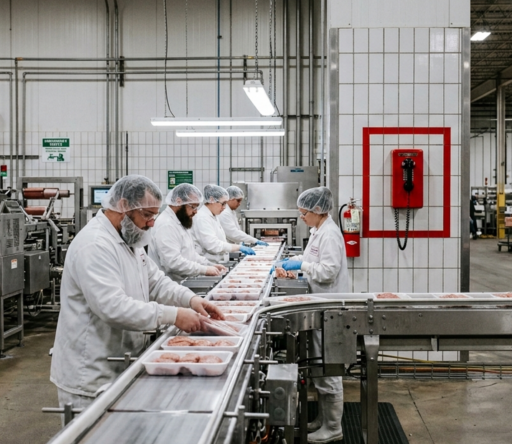
Food and beverage processing plants are physically demanding environments. Heavy equipment, extreme temperatures, chemical sanitizers, and fast-moving production lines create genuine injury risk. OSHA requires processors to maintain rigorous safety standards — and employees who witness violations are often reluctant to report them through internal channels for fear of being sidelined or penalized.
An independent, third-party hotline removes that barrier. Workers can report a malfunctioning guarding system, a shortcut being taken with lockout/tagout procedures, or an unreported workplace injury — and know their report will be taken seriously without blowing back on them.
- Falsification of Quality and Compliance Records
In a high-pressure production environment, the temptation to “pencil-whip” a safety or quality log — filling in check marks that don’t reflect actual inspections — is a real and recurring problem. Record falsification can pass internal audits for years before a regulatory inspection or a recall uncovers it.
Employees who know this is happening are your best early warning system. But only if they have somewhere to report it. A well-designed hotline program — one that employees actually trust — is often what surfaces these issues before they become criminal matters.
- Supplier and Vendor Misconduct
Your compliance exposure doesn’t end at your loading dock. Under FSMA, processors are responsible for verifying the safety practices of their suppliers. Employees in purchasing, receiving, and quality assurance roles frequently have visibility into supplier behavior that management does not — substandard raw materials being accepted, documentation irregularities, or side deals that circumvent your approved vendor program.
A hotline for food & beverage processors captures those concerns before they land you in a recall or an FDA enforcement action.
- Workplace Harassment and HR Issues
The food and beverage processing workforce is often large, multilingual, and operating in high-stress conditions. Harassment, discrimination, and hostile work environment issues are unfortunately common — and employees in these settings may feel especially vulnerable about coming forward.
Red Flag Reporting’s hotline is available in numerous languages via web and phone, making it genuinely accessible to the diverse workforces that characterize this industry.
- Theft and Internal Fraud
Product theft, inventory manipulation, and financial misconduct are not hypothetical risks in processing facilities. The combination of high-value inventory, complex logistics, and large, layered workforces creates meaningful opportunity for internal theft. The most cost-effective way to detect it isn’t a forensic audit after the fact — it’s having employees who feel empowered to report suspicious behavior the moment they see it.
- Environmental and Regulatory Violations
Processing plants generate wastewater, use refrigerants, and handle chemicals subject to environmental regulation. Improper disposal, unreported spills, or emissions that exceed permitted levels can draw EPA scrutiny and significant fines. Here again, employees on the floor are typically the first to know — and a confidential hotline gives them a path to report that doesn’t require them to contact a regulator directly.
The Culture Case: Beyond the Checklist
It’s tempting to think of a compliance hotline as a checkbox item — something you implement to satisfy an auditor or insurance underwriter. That undersells what a well-run program actually does.
When employees see that a hotline exists, that reports are acted upon, and that reporters are protected from retaliation, it shifts workplace culture. It signals that leadership is serious about doing things right. That signal matters in food and beverage processing, where the integrity of your products depends every day on thousands of individual decisions made by workers throughout your facility.
Our recent blog post on how hotlines transform workplace culture explores this shift in depth — the move from a “stay quiet” environment to one where employees feel genuinely invested in the organization’s integrity.
What to Look for in a Hotline for Food & Beverage Processors
Not all hotline programs are created equal. For food and beverage processors specifically, you’ll want to look for:
Multi-language capability. Your workforce likely spans multiple languages. A hotline that only operates in English will be used by only part of your team — leaving blind spots in your coverage.
24/7 availability. Processing operations don’t stop at 5 p.m., and neither do the issues that arise in them. Around-the-clock access, both by phone (with live operators) and through a web portal, ensures reports don’t wait until the next business day.
Anonymous two-way communication. The ability for an investigator to ask follow-up questions of an anonymous reporter — without revealing the reporter’s identity — is essential for building usable cases from hotline reports.
Third-party independence. Employees are significantly more likely to report concerns via an independent, outside provider than to an internal hotline or a direct supervisor. The independence of the provider is what makes the channel trustworthy.
Case management. A hotline is only as good as what happens after the report is filed. Look for a provider that offers robust case management tools so that every report is tracked, assigned, and resolved — not filed and forgotten.
Red Flag Reporting: Built for the Complexity of Your Industry
Red Flag Reporting has served clients across industries — including food and beverage processing — since 2010. Our service is designed to be comprehensive, not narrowly focused on financial fraud. From safety concerns and environmental issues to harassment and supplier misconduct, our hotline captures the full spectrum of risks that processors face.
We provide a nationwide toll-free number staffed by live operators around the clock, a 24/7 web reporting portal, multilingual capabilities, case management software, and a suite of ongoing communication tools — including workplace posters, wallet cards, and quarterly emails — to keep hotline awareness high throughout your organization.
Implementing a hotline for food & beverage processors through Red Flag Reporting is straightforward, affordable, and can be up and running faster than you might expect.
The Cost of Not Having One
Consider what a single undetected food safety violation can cost: an FDA recall, the logistics of pulling product from distribution, the legal exposure, the reputational damage, and the lost retail relationships. Compare that to the annual cost of a professional hotline service — typically a nominal amount per employee per year.
The math isn’t close. And neither is the decision.
Ready to Protect Your Operation?
If you’re a food or beverage processor looking to strengthen your compliance program, reduce your regulatory exposure, and build a culture where integrity is the norm rather than the exception, we’d love to talk about implementing a hotline for food & beverage processors.
Contact Red Flag Reporting today to learn how a hotline for food & beverage processors can be implemented in your organization — quickly, affordably, and with no pressure. Just honest information about how we can help.
Red Flag Reporting provides confidential ethics, safety, fraud, whistleblower, and compliance hotline services to organizations across North America and around the world.