
Airport Compliance Hotline: 5 Critical Reasons Your Airport Needs One
Airports are among the most complex workplaces in the country, with airport authority staff, airline employees, TSA personnel, concessionaires, ground handlers, and contractors all sharing the same terminals, ramps, and back-of-house areas. That overlap makes it harder to spot and report problems before they escalate. An airport compliance hotline gives everyone on the property a single, confidential channel to raise a concern—something internal-only reporting often fails to achieve. That is why more airport authorities are adding one to their compliance and safety programs.
What Is an Airport Compliance Hotline?
An airport compliance hotline is a third-party reporting service that allows employees, contractors, tenants, and vendors to submit concerns about safety, security, ethics, or financial wrongdoing by phone, web portal, text, or email, without having to go through a supervisor first. Reports are documented in detail and routed to the airport authority’s designated compliance, HR, or safety contacts, who then determine next steps.
A hotline provider’s role is to capture the report accurately, protect the reporter’s confidentiality, and deliver the information to the right people. What happens next, including any investigation or resolution, stays with the airport authority’s own personnel. If you would like a closer look at how these programs are typically structured, our article on what is the difference between an ethics hotline and a whistleblower hotline explains the distinction in detail.
Why Airports Face Unique Reporting Challenges
Airports operate differently than a typical single-employer workplace, and that difference is exactly why a generic, internal-only reporting process tends to fall short. With rising regulatory scrutiny, a workforce that turns over quickly, and near-constant public attention, airports cannot rely on internal channels alone to surface problems early. Many regulated industries already lean on third-party reporting systems for exactly this reason, as a standard component of their compliance and risk management programs.
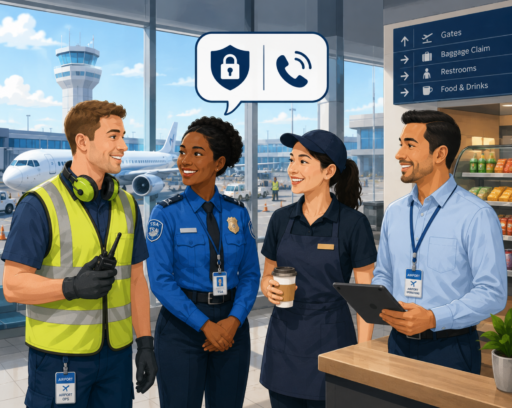
- Multiple employers under one roof. Airline employees, concessionaire staff, ground crews, and contractors all report to different companies, but a safety or security concern can involve any of them. A shared, independent airport compliance hotline gives everyone the same accessible reporting channel, no matter who signs their paycheck. For example, a concessionaire employee who notices a safety hazard on the ramp may hesitate to report it because they don’t work for the airport authority; a shared hotline removes that hesitation.
- A heavily regulated, safety-first culture. Airports certificated under FAA Part 139 already operate within a formal Safety Management System designed to encourage proactive, non-punitive hazard reporting. The FAA’s guidance on Safety Management Systems for airports describes how this kind of reporting culture is meant to surface risks before they become incidents. Extending that same speak-up mindset to ethics, fraud, and HR concerns helps an airport build one consistent culture of reporting, rather than a patchwork of separate processes for safety versus everything else.
- High public visibility. An incident at an airport, whether it involves a security lapse, a vendor billing dispute, or a harassment complaint, can become a public story quickly. Airport authorities have a strong incentive to learn about problems internally and early, before they surface in the news or with a regulator.
- Layers of vendors and concessions. Restaurants, retail tenants, parking operators, and maintenance contractors add even more people who may notice a problem but who do not feel comfortable calling airport management directly.
5 Critical Reasons an Airport Needs a Compliance Hotline
Taken together, these factors point to a clear conclusion: an airport compliance hotline belongs in your organization’s compliance program. Here are five reasons why:
- Encourages early reporting across every workforce on the property. Because the hotline operates independently of any single employer, airline staff, contractors, and concessionaire employees are more likely to use it than an internal-only channel.
- Supports an existing safety culture. Airports that already operate a Safety Management System or similar safety program can extend that same non-punitive, speak-up mindset to ethics, HR, and financial concerns.
- Ensures consistent, thorough documentation. A dedicated hotline service captures every report the same way, with a similar level of detail, so the airport authority’s compliance and HR teams have clear documentation to work from, regardless of who submits the report or how.
- Removes a common barrier to speaking up. When ground crews, vendors, and tenant employees know a confidential outside line is available, they have one less reason to stay silent about a safety, harassment, or fraud concern.
- Protects reputation and public trust. Airports are public-facing infrastructure, and travelers, tenants, and regulators all benefit when problems are caught and routed internally rather than escalating into headlines.
In short, a strong airport compliance hotline gives anyone on the property, regardless of employer, a clear path to report a concern.
How Red Flag Reporting Supports Airport Authorities
Red Flag Reporting is a hotline provider that gives airport authorities, fixed-base operators, and airport-adjacent businesses a confidential, 24/7/365 channel for employees, tenants, contractors, and vendors to report concerns by phone, web, text, or email. Reports are documented and routed directly to the airport authority’s designated compliance, HR, or safety contacts according to that organization’s own instructions. Red Flag Reporting does not investigate or resolve the matters that come through the hotline; that responsibility stays with the airport authority’s own personnel, who are in the best position to act on the report.
Our hotline services include multilingual reporting for a diverse airport workforce, secure case management tools for consistent documentation, and posters, wallet cards, and other communication materials designed for high-traffic terminal and back-of-house areas. Quarterly communications help keep the hotline visible to a workforce that is constantly turning over. Whether your airport authority needs a hotline for its own employees or a shared resource for the many businesses operating on airport property, Red Flag Reporting can help you build a reporting channel that fits your existing compliance program.
Ready to give every employee, contractor, and tenant a confidential way to speak up? Contact us today to see how an airport compliance hotline can be implemented across your entire airport and fit into your existing safety and compliance program.